

Is English the hardest language to learn? Glacier: 3 Advantages + Immersion Programs to Crack the Myths of English Learning
Previously we discussed the 3 major pain points of English learning, today we continue to go deeper: is English really the most difficult language to learn? As Glacier, which specializes in summer school, junior study abroad, and au pair programs, we combine real service cases and the laws of language learning to demystify the myths and provide targeted solutions for you.
I. The “simple” side of English: 3 overlooked advantages
English is not all difficult, and its 3 characteristics actually lower the barrier to entry:
-
simple verb conjugation
In contrast to the complex personal conjugation of Spanish and French (e.g., French “je parle/tu parles/il parle”), English verb conjugation is more concise: most verbs are only third person singular with an “s” (e.g., “I run/you run/he runs”). “I run/you run/he runs”). Even irregular verbs (e.g., "go→went"), which are limited in number and used with high frequency, are easy to familiarize with.
-
Lack of gender terminology
English nouns are not feminine or masculine, so there is no need to memorize gender collocations as in French (la table/le livre) or German (die Frau/der Mann), and sentence structure is more intuitive, reducing the cognitive burden on beginners.
-
Extensive global reach and resources
English is a global language: it is everywhere: in social media, in movies and television (e.g. Harry Potter), in academic literature. Learners often have early exposure (e.g., children's songs, games), shortening the “unfamiliarity” curve.
Second, expert opinion: English is difficult or not, the key to look at the “language distance”
According to language experts, learning difficulty is subjective and relative - it centers on “linguistic distance”: the greater the difference between your native language and English, the higher the learning threshold (e.g., native Chinese speakers need to get used to tenses, native Arabic speakers need to get used to the alphabet).
Glacier's response:
- Preparatory classes for younger students to study abroad: customized classes based on students' native language background (e.g. Chinese/Spanish) (e.g., intensive tense training for Chinese students, simplified gender-noun transitions for Spanish students);
- Au Pair Program: Native tutors (British, American, Canadian, Australian) adjust the difficulty of the conversation according to the student's language base, reducing the “language distance”.
Glacier: 3 efficient study skills to break the ice!
The key to mastering the English language is the scientific method, and Courtesy's business is designed to do just that:
▶ Language immersion: making English “a part of life”
Immersion is the golden rule of language learning, and Court Leahy offers 3 paths:
- Au pair program: Native-speaking au pair accompanies you daily (reading picture books, playing games, daily conversations), corrects your pronunciation in real time, and absorbs vocabulary naturally;
- Study abroad at an early age: real overseas campus environment (e.g. British and American elementary/middle school), using English in the whole scenario from classroom discussion to cafeteria communication;
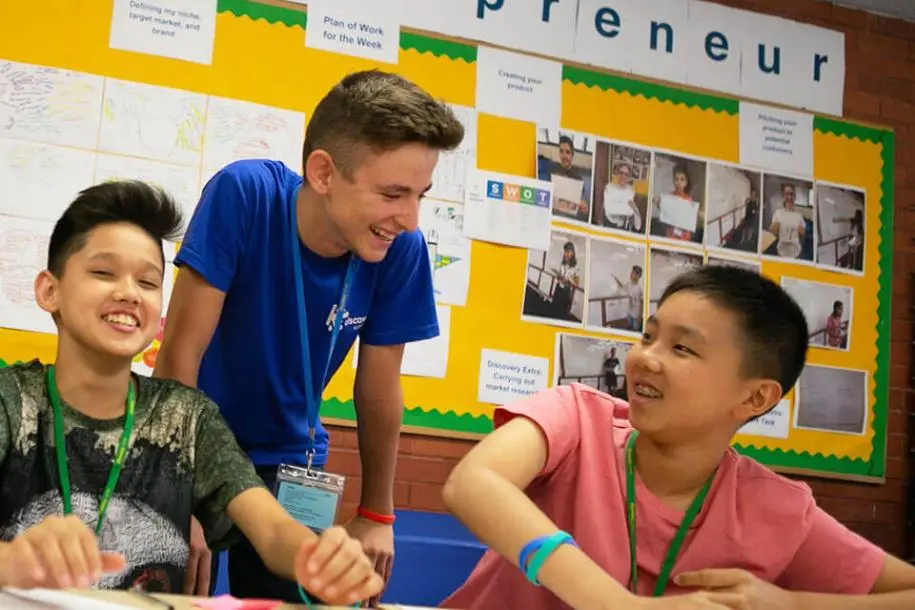
- Summer School: a full English boarding environment with 24-hour immersion and no interruptions, from breakfast conversations to outdoor exploration.
▶ Programs designed for international learners: matching levels, step-by-step progression
The Curriculum of Gerlach covers the needs of different stages:
- Summer school English courses: academic English (essay writing, classroom debates) and conversation skills (daily communication, cultural expression) for all levels;
- Preparatory Course for Underage Study Abroad: simulates the overseas classroom model, strengthens listening comprehension and academic vocabulary, and adapts to the pace of overseas study in advance;
- Customized tutoring for au pairs: personalized exercises (e.g., natural spelling games, tense conversations) are designed to address the child's weak points (e.g., grammar, pronunciation).
▶ Cultivate self-confidence in listening and speaking: Don't be afraid to make mistakes and speak up.
Many students are afraid to speak English for fear of making a mistake. Court Leahy breaks down barriers in the following ways:
- Interactive summer school activities: debate competitions, keynote speeches, group projects, encouraging students to take the initiative and express themselves (e.g., “Environmental Debate” to present their views in English);
- Au pair daily conversation: the tutor guides the child to open his/her mouth with easy topics (e.g. anime, sports) and corrects him/her patiently even if he/she makes mistakes, building up his/her self-confidence;
- Psychological counseling for underage students: help students overcome “culture shock” and dare to ask questions and speak in overseas classrooms.
IV. Conclusion: Is English difficult? The key is “method + support”.”
English has challenges (irregular spelling, lots of idioms), but it also has strengths (simple inflection, genderless nouns, abundant resources). Whether it is the “hardest” or not depends on your native language, learning environment and support system.
Glacier's Summer School, Study Abroad, and Au Pair programs offer structured learning, immersive environments, and personalized support to transform English learning from a “pain” to a “sense of accomplishment”.
V. Exploring English language learning opportunities in Glacier
Whether you are new to the English language or want to improve your skills, Courtesy has a program for you:
- Summer School: Full English boarding program that combines academic learning with cultural experiences (e.g., overseas school visits, theme parties) to develop a global perspective;
- Study abroad at an early age: 1v1 planning service, matching with suitable overseas schools to help smooth the transition;
- Au Pair Program: Native-speaking tutors are stationed in the home for daily companionship to improve speaking skills.
Contact Glacier today to learn more about our programs or to submit an inquiry and start your English learning journey!
About Glacier: Glacier focuses on summer school, junior study abroad, and au pair programs, and has helped 500+ families solve their English learning and overseas study problems, with an average increase of 2 CEFR levels in students' English proficiency. We use scientific methods to make English learning more efficient!