

Is it too early for a child to learn English at the age of 3? Glacier:Science enlightenment + immersive environment is the right way to open!
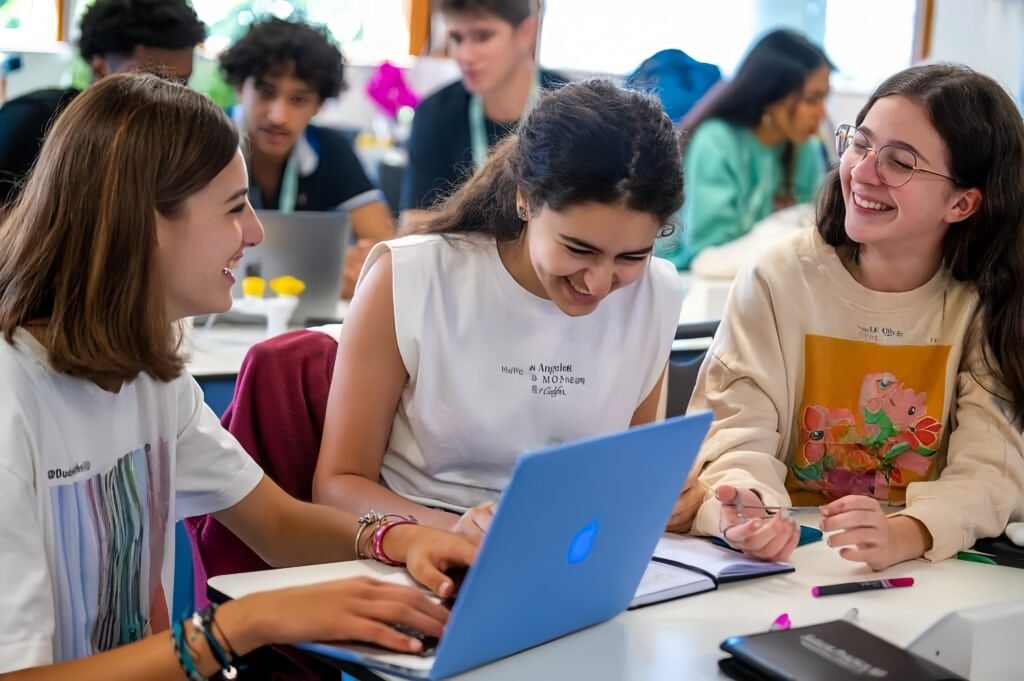
Recently, many parents have been asking Glacier’s advisors: “My child is only 3 years old—should we start introducing English? Isn’t that pushing them too hard?” In fact, early English learning isn’t just blindly following a trend—it’s backed by scientific evidence. Moreover, with the right approach (such as an immersive environment), children won’t resist it; instead, it can pave the way for their future international education.
I. Learning English at an early age isn’t about competition—it’s science!
Don’t worry—this isn’t just parents overreacting! Language experts clearly state that ages 3 to 6 are the golden years for introducing children to English.
At this stage, a child’s brain acts like a “super language sponge”: it is most sensitive to English pronunciation and intonation, allowing them to absorb the language as naturally as they would a native tongue (for example, treating “apple” as a “code word” for the fruit rather than an abstract word) . Through years of summer school and early-age study abroad programs, Glacier has found that children who are exposed to immersive English before the age of 6 achieve 30% higher spoken fluency than their peers, and they rarely suffer from the “silent English” problem.
On the contrary, if children don’t start learning until they are 9 years old (third grade), their brains become less sensitive to sounds, and they can only rely on “logical memorization” to learn vocabulary and grammar—which is precisely why many children come to dislike English: “It’s just too hard!”
Is it too late to start in second or third grade? Here are some pitfalls parents should avoid
Many parents don’t start to worry until their children reach third grade:
– Rote memorization of grammar → The more children study, the more frustrated they become;
– Watching only animated shows with subtitles → The child stares at the Chinese translation and doesn’t listen to the English at all;
– Enrolling in “cram-style” tutoring classes → The child gets high test scores, but struggles to speak.
The consultants at Glacier have seen far too many cases like this: children who miss the critical window—even if they later attend summer camps abroad—take 1–2 weeks to adjust to an all-English environment; whereas children who start learning before age 6 can play games and chat about everyday life with foreign teachers on their very first day.
III. Early Learning ≠ Rote Memorization! Gelaixi Teaches You the Right Approach to Early Education
The key to learning English at an early age is an “immersion experience,” not simply “sitting down to memorize vocabulary.” Glacier’s summer camp and au pair programs are designed precisely with this principle in mind:
-
Summer Camp: Short-Term Immersive “Learning Through Play”
For example, at Gelaixi’s overseas summer camp, children spend their entire time with foreign teachers and international peers doing crafts, outdoor adventures, and baking—there are no boring grammar lessons, yet they naturally pick up practical phrases like “Pass me the flour” and “This tree is tall.”
-
Au Pairs: Creating a Long-Term Interactive Environment at Home
Gelaixi’s Au Pair Program matches families with young, native English-speaking au pairs from abroad who spend time with the children every day playing with building blocks, reading picture books, and engaging in games—essentially bringing a “mini English-speaking environment” into the home, allowing children to effortlessly pick up English through daily interactions.
-
Study Abroad for Young Students: Laying the Groundwork for a Fully International Education
For parents who plan to give their children an international education, Gelaixi’s early-age study abroad services provide comprehensive planning: from early English exposure in kindergarten to transferring into overseas elementary schools, helping children adapt to the international education system step by step.
IV. Tips for Parents: Early Learning Starts with “Play”
If you don’t have any immediate plans to attend a summer school or participate in an au pair program, here’s what you can do in your daily life:
– Listen to English nursery rhymes (such as “Baby Shark”) → to develop a feel for the language;
– Watch English-language cartoons without subtitles (such as the English version of *Peppa Pig*) → to help your child focus on pronunciation;
– Use everyday phrases in English (such as “Let’s eat” and “Good night”) → to establish a connection between English and daily life.
V. Glacier: Accompanying You on Your Child’s Journey Toward a Global Education
When it comes to early childhood English education, choosing the right approach is more important than starting early. Glacier has specialized in summer camps, study abroad programs for young children, and au pair programs for several years. We have always adhered to an “immersion-based, native-language” approach to early education, helping children build a solid foundation in English during their critical developmental period and paving the way for their future international education.
👉 Click on the [Summer School/Au Pair] section of our official website to get a free introductory plan; or contact a Gelaixi advisor to discuss a personalized international education plan for your child~