


Glacier|10 Good English Habits for Kids: Painless to develop and more efficient to link up with au pair/summer school!
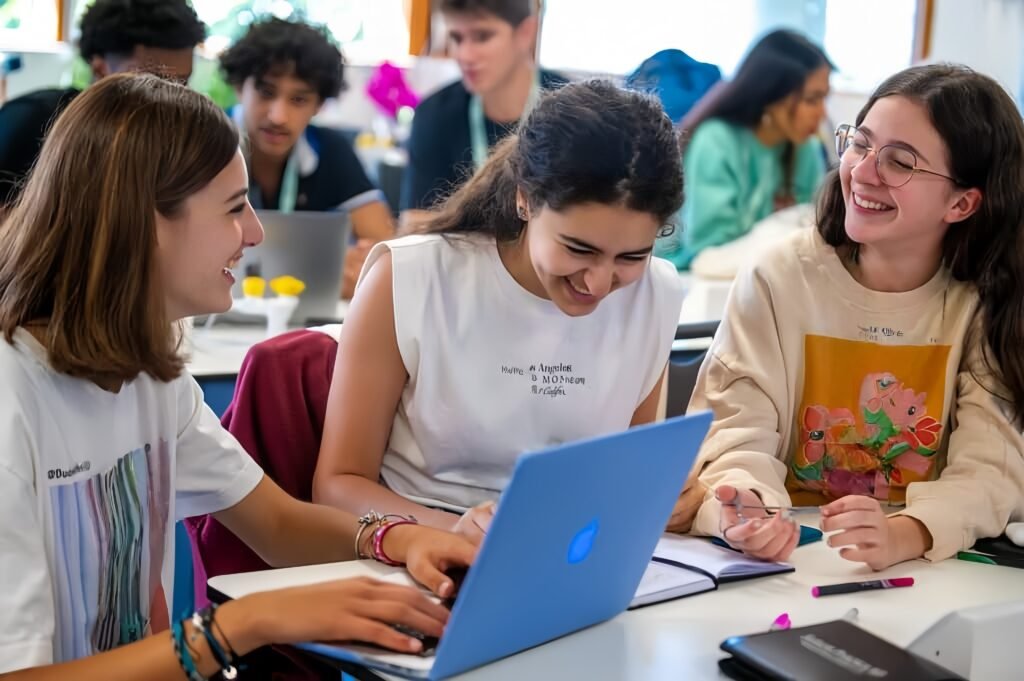
Why do some children learn English easily and confidently, while others can't remember and don't dare to speak? Glacier has been working on children's cross-cultural education (summer school, study abroad and au pair programs) for several years, and we have found that the core gap lies in whether or not English has become a natural habit rather than a deliberate “task”. Today, we share 10 good habits that have been tested and proven to be effective in children's English, each of which can be linked to our programs to help children advance painlessly!
Habit 1: Pick up English anytime, anywhere - turn your life into a small classroom!
Core: Recognizing English labels in supermarkets, reading words on toy packages, and lines from cartoons are all free English material.
Tips: In the au pair families, foreign au pairs will take their children to the supermarket to recognize “Apple” and “Milk”, and read “Pizza” on the menu. "This is a great way to turn your child's fragmented time into natural English interaction, which is more efficient than memorizing vocabulary on purpose!
Habit 2: Creating an “English Growth Book” - Making Knowledge Visible
Core: When you come across unfamiliar words/sentences (e.g. new expressions in picture books, slang spoken by au pairs), write them down and review them once a week.
Tips: Children who participate in the summer school will receive an exclusive “English growth booklet” where they can record the new sentences they learn every day and use it when interacting with their au pair after returning to their home country, thus doubling the consolidation effect!
Habit 3: “Brain-mouth synchronization” - practicing English thinking without translation
Core: Think “Cat” when you see “Cat”, not Chinese first and then translate.
Tips: The au pair program's English speaking environment forces children to think in English - for example, if an au pair asks “Want to play?”, the child will answer “Yes” without translation! The au pair program forces the child to think in English - for example, if the au pair asks "Want to play?", the child will answer "Yes!" without translation!
Habit 4: Speak 15 minutes a day - Speaking is more important than memorizing!
Core: You don't need to make long speeches, even if it's “Good morning” or “I want water”, say it for 15 minutes a day and you'll maintain your sense of language.
Tips: Au pairs have 30 minutes of speaking interaction (games/chat) with their children every day, so the children dare to speak and love to speak; summer school children are immersed in a full English environment every day, and their confidence in speaking explodes when they come back!
Habit 5: Read English Out Loud - Confidence Begins with Opening Your Mouth
Core: Read picture books and children's songs out loud to practice pronunciation and build self-confidence.
Tips: The summer school has “English reading time” every day, where the foreign teachers use exaggerated tones to drive the children; the au pairs also read English picture books with the children, so the more the children read, the happier they get, and the more their pronunciation becomes more and more authentic!
Habit 6: “Breathing” Tips for Fuller Pronunciation
Core: open your mouth in the morning “ah” 5 minutes, practice lung capacity, pronunciation more clear and powerful.
Tips: Au pairs will bring the children to do the “Blow up the balloon and say the word” game - when blowing up the balloon, say “Balloon”, not only to practice the air and pronunciation, the children feel fun and effective! Children find it fun and effective!
Habit 7: “Used” English - Avoiding “Dumb English”
Core: Use what you learn, such as asking for help in English (“Help me”) and describing toys (“This is a car”).
Tips: In the program, the children will simulate life abroad (ordering breakfast in English); the children in the au pair family will solve small problems in English every day, and English will become a real “living” language!
Habit 8: Use a Repeater Correctly - Imitation is the Best Teacher
Core: listen without reading, read without listening, and imitate pronunciation and intonation sentence by sentence.
Tips: The au pair will also work with your child to help them pronounce the words in a more authentic way!
Habit 9: Learn Pronunciation from a Native Speaker - Avoiding Chinese English
Core: Learn pronunciation with a tutor/au pair, don't practice on your own.
Tips: All au pairs are native English speakers and summer school teachers come from the UK, USA, Canada and Australia, so children can learn the most authentic pronunciation and intonation and avoid “Chinglish”!
Habit 10: Learning English with pleasure - interest is the best teacher
Core: Think of English as a game, not a task (e.g., English board games, scavenger hunts).
Tips: All of our programs are centered on “learning through play” - au pairs take children to play English puzzles, summer schools organize English treasure hunts, children fall in love with English in a happy way, and habits are formed naturally!
Glacier: Helping Children Make Good Habits a Daily Routine
Developing good English habits does not depend on the child's efforts alone, but requires the support of a professional environment:
- Au pair program: family immersion with full English interaction and daily practice of speaking/thinking;
- Summer school: full English international environment, quickly develop the habit of speaking;
- Preparation for studying abroad at an early age: scenario-based training to adapt to English life overseas in advance.
Want to know which program is right for your child? Click [Online Consultation] to get a free evaluation from a professional consultant at Courtesy of Court Leahy!